

Looking to login to start testing? Click Here
Looking to login to start testing? Click Here
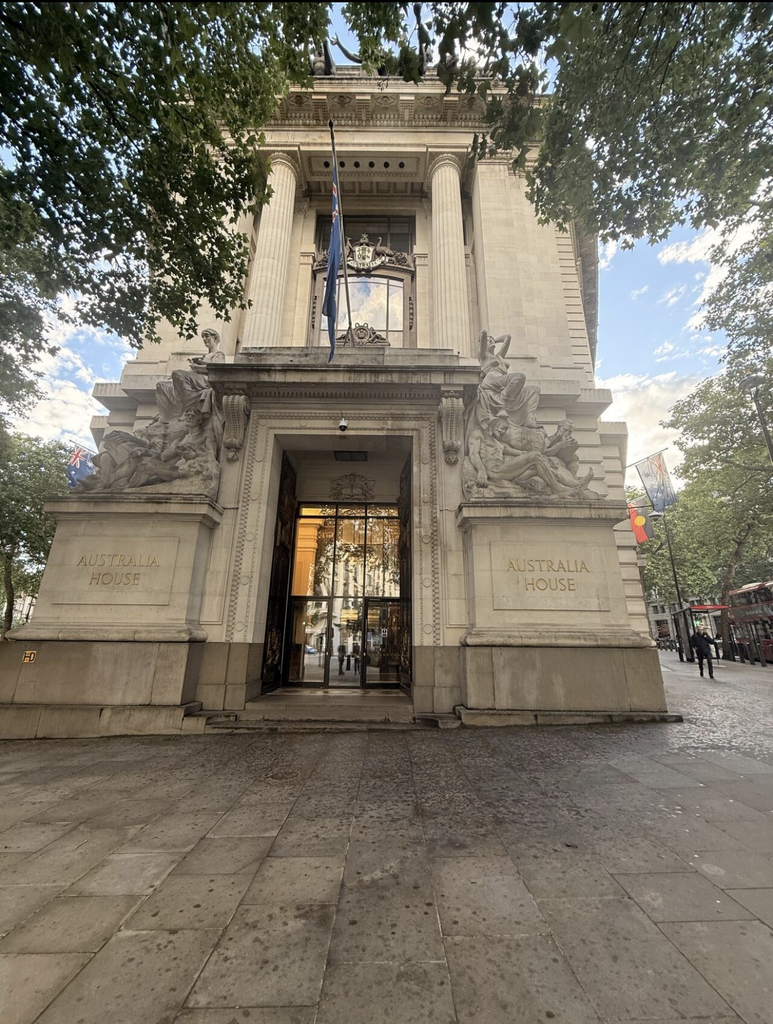
Australia House on the Strand, host venue for the Austrade health and technology event.
We have just got back from the UK, where Eyeonic joined an Australian digital health delegation for a week built around three very different rooms: the country’s largest technology festival, its leading health and care conference, and an evening at the Australian High Commission.
Each served a different purpose, and together they did a job that no single event quite manages. Here is where we went, what each was for, and what came of it.
London Tech Week is the UK’s largest technology festival, filling Olympia London with founders, investors, policymakers and corporates. Health technology is one strand among many, which is precisely what makes it useful. The people in the room are not only the ones who already think about eye care.
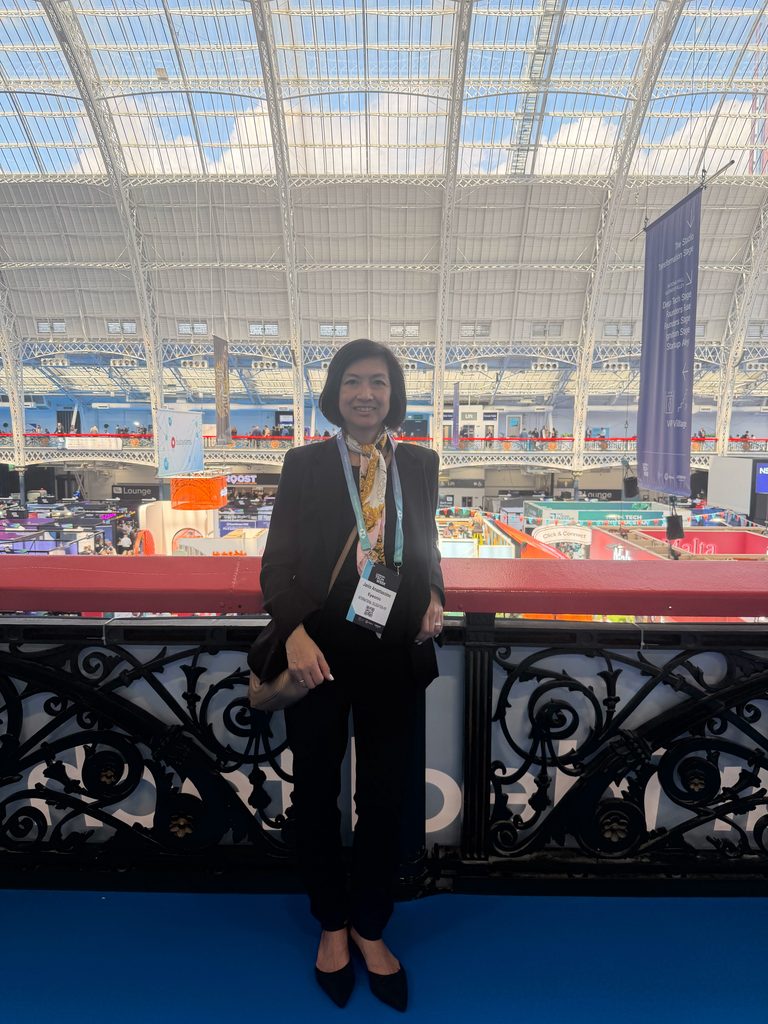
Eyeonic CEO Janis Anastassiou on the floor at London Tech Week, Olympia London.
Visibility and investment conversations, mostly. Investors and commercial partners at an event like this are assessing whether a technology scales beyond its home market, so the questions run to distribution, unit economics and regulatory reach rather than clinical detail. It was also a good place to talk about the parts of the platform that sit outside ophthalmology, including driving vision testing and pilot vision testing.
Better than expected, and the reason was density. Health systems, investors, regulators and founders were in the same hall at once, so conversations that would take a quarter to arrange from Melbourne happened between sessions. Several of the most useful introductions of the entire week came from standing in a queue.
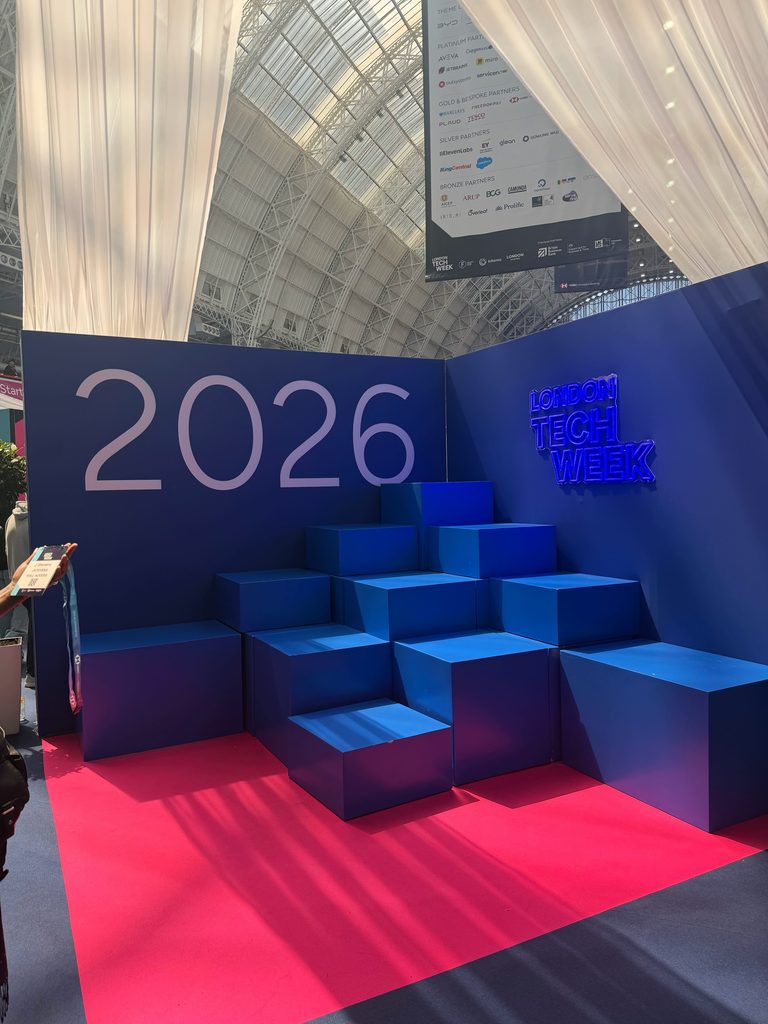
London Tech Week 2026 at Olympia.
NHS ConfedExpo is the UK’s leading health and care conference, delivered in partnership by the NHS Confederation and NHS England across two days at Manchester Central. It brings together more than 5,000 leaders, clinicians, managers and system partners, and it is where NHS priorities for the year get argued out in public.
This was the clinical and system end of the trip. Glaucoma is the leading cause of irreversible blindness worldwide and early disease produces no symptoms at all, so visual field testing is central to catching it early and tracking it over time. Traditionally that has meant a bulky machine in a clinic, and ophthalmology outpatient capacity is one of the NHS’s most persistent pressure points.
The Eyeonic Online Visual Field Test turns a standard computer or tablet into a sophisticated visual field testing device, and it is designed to support examination by an eyecare clinician rather than to replace it. In Manchester that proposition needed no introduction. Access, backlogs and sustainable models of care were already the agenda.
The questions here were the most specific of the week, and the most useful. Not how the technology works, but who pays, who reviews the result, where it sits in an existing pathway and what evidence sits behind it. Being able to point to published validation shortened those conversations considerably, and many came back to the same practical points we cover in our FAQs.
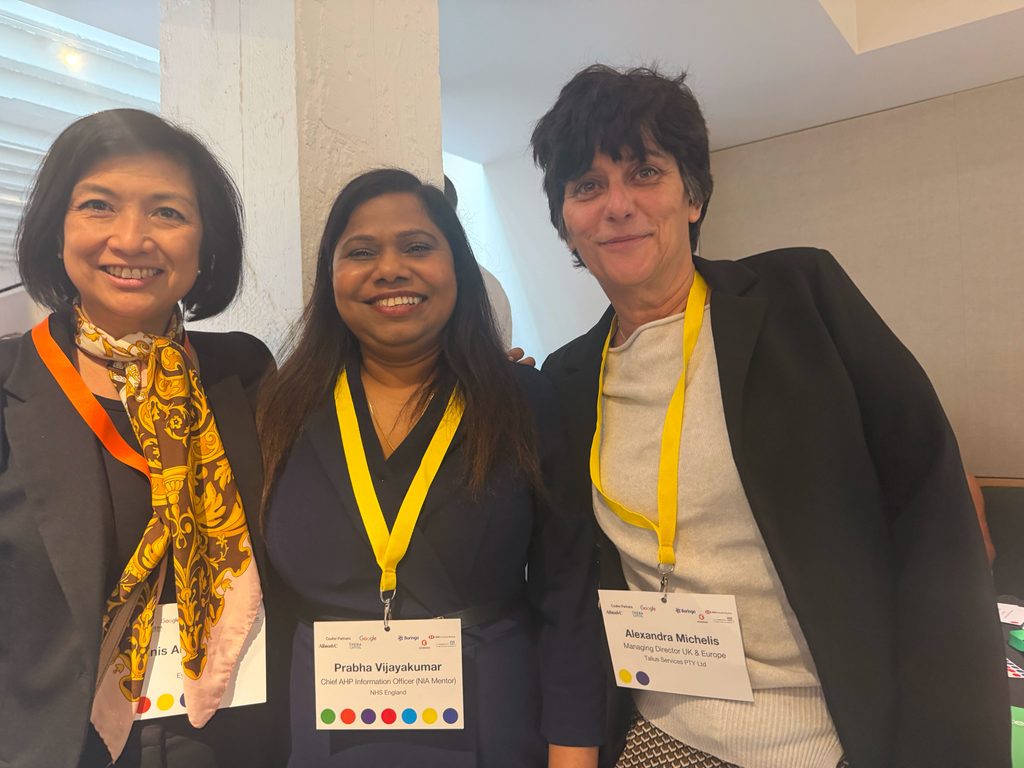
Meeting health system leaders and partners during the UK programme.
A panel and networking event hosted at Australia House on the Strand, supported by the Australian Trade and Investment Commission alongside ANDHealth and the Tech Council of Australia, bringing the Australian delegation together with UK health system contacts.
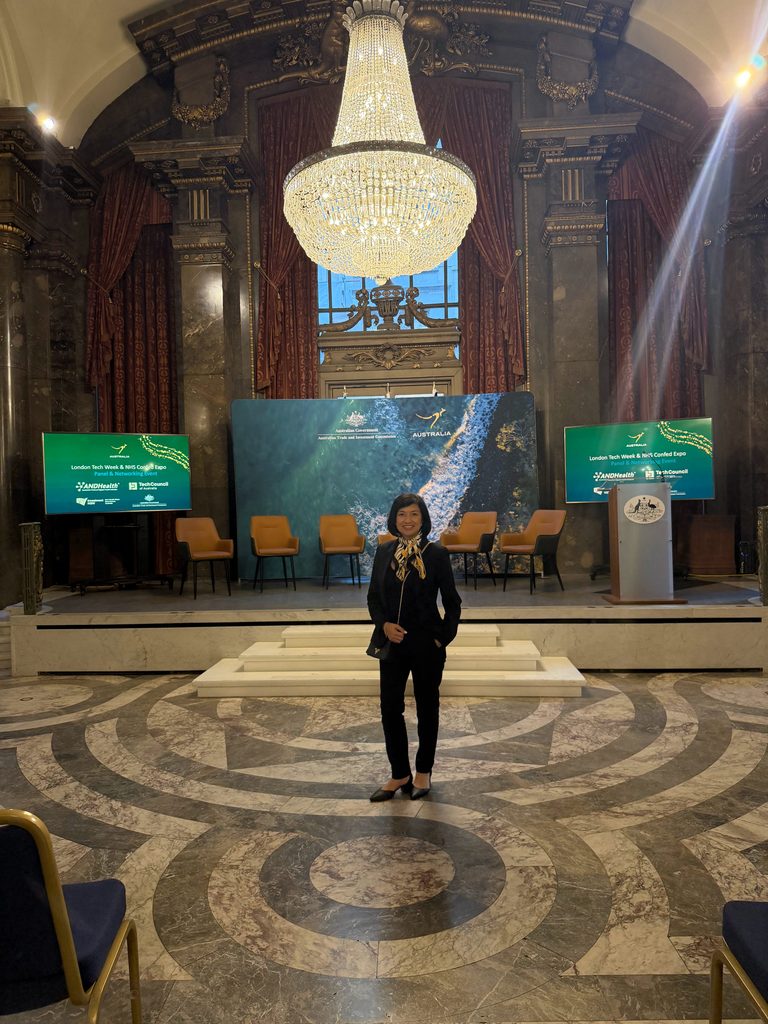
The main hall at Australia House, set for the panel and networking event.
Introductions, and a kind of credibility that is difficult to manufacture on your own. Having the Australian government put its name and its front door behind a group of small companies changes how those companies are received. Introductions that would take weeks to arrange happen across a room.
The roundtables were the least glamorous hours of the week and among the most valuable. Sitting with UK health system leaders, clinicians and commercial partners meant being asked directly about evidence, regulatory pathway, procurement and who exactly signs off on a decision. You can research a market for months and still not know which objection comes up first in the room.
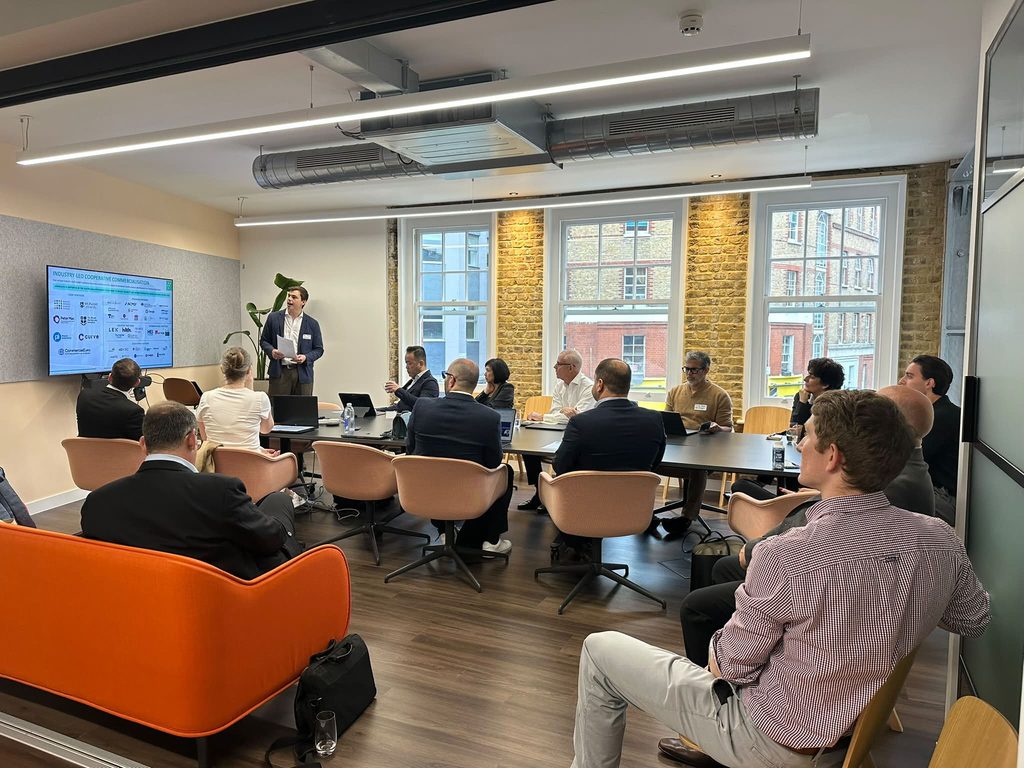
Roundtable sessions gave delegates direct access to UK health system leaders and commercial partners.
Hearing from Australian companies already operating in the UK was just as useful, and several were generous about what had not worked, which is the more instructive half of that conversation. Our thanks to the Austrade team in London and to ANDHealth. A week like this looks effortless from the inside only because a great deal of work went in beforehand.
Three things stood out, and none of them were on the agenda when we left Melbourne.
There is also something to be said for our small team spending a week alongside other Australian founders and operators facing the same problems at the same stage. A lot of the useful conversation happened over dinner rather than in a session.
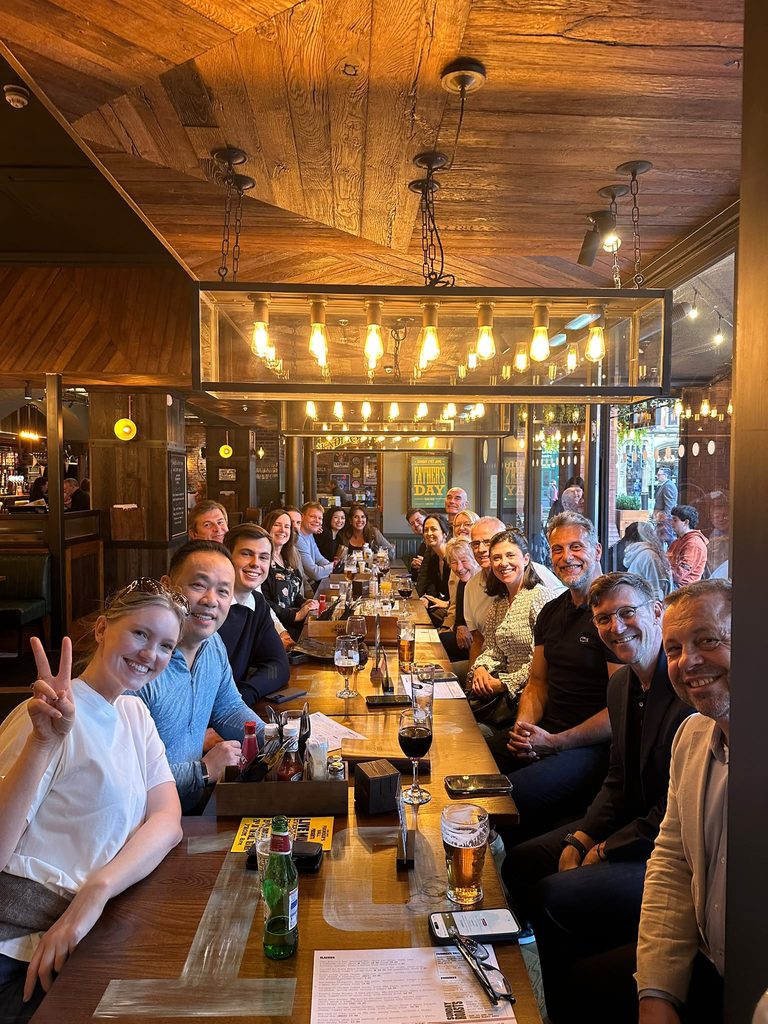
The Australian delegation over dinner in London.
The follow up is the part that decides whether a week like this was worth it, and that work is underway now. We came home with a clearer view of where online perimetry fits in the UK, who the right early partners are, and what we need ready before the next conversation rather than after it.
It builds on a busy stretch. Removing the constraints around visual field testing is the problem Eyeonic was built to solve, and since our founder A/Prof Simon Skalicky started the company it has grown into a platform used by eyecare professionals across 25 countries, with more than 50,000 tests completed. Earlier this year we were awarded an Industry Growth Program grant, and our work in Uganda showed what accessible testing can do where clinic-based perimetry simply is not available.
The UK is a natural next chapter, and this week moved it from an idea to a plan.
If you are an eyecare professional interested in online visual field testing, or a partner working on access to eye care in the UK or elsewhere, we would be glad to hear from you. Get in touch with the team, or sign up to try Eyeonic.







The shared vision of reducing blindness globally through improved access to critical eyecare diagnosis via digital products is being realised.
Start Now