Looking to login to start testing? Click Here
Looking to login to start testing? Click Here

Eyeonic was founded in 2019 by A/Prof Simon Skalicky, glaucoma-subspecialist Ophthalmologist, clinical researcher and tech developer.
Professor Skalicky saw an acute need to improve the process of visual field testing, critical to glaucoma diagnosis and management. He saw the problems of conventional visual field testing with large, bulky machines – these were unpleasant to use, expensive, broke down and were a bottleneck to flow for already crowded glaucoma clinics world-wide. He saw the incredible benefit of an online application which could provide visual field testing on any computer or tablet, reducing the cost, improving the access and use-experience of visual field testing, and allowing proper digital integration with modern electronic medical records and telemedicine systems.
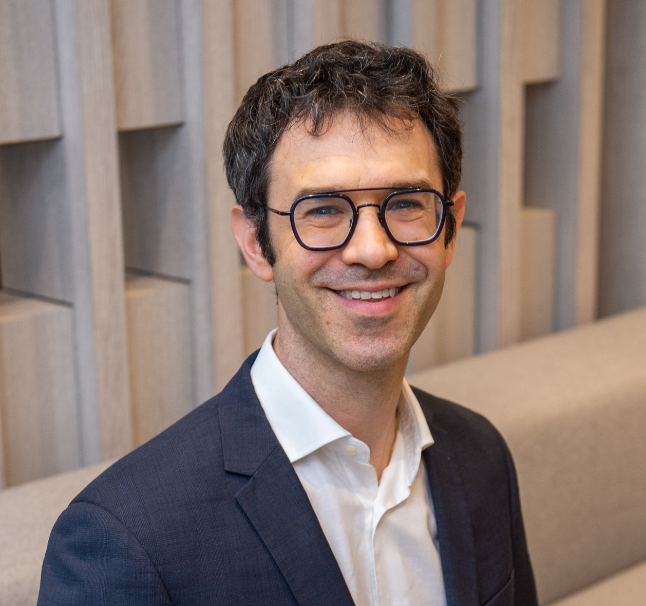
A/Prof Skalicky began researching the mathematics behind visual field testing algorithms and piece by piece, night after night, carefully put together the code required to test peripheral vision. He thought carefully about re-engineering the features of visual field testing so that it would work on any computer, and built the test accordingly. He deployed it on a simple webpage and began collecting validation data from patients – first from those with normal vision to establish a normative cohort, and then those with visual field loss from glaucoma to validate the product.
Along the way he was encouraged by his patients, who showed a strong preference for the early app over conventional visual field testing, and provided ongoing encouragement for the app development. One patient, who was a senior programmer, cloud architect and AI engineer at Microsoft, saw the amazing translational potential of the technology and wanted to help. He linked A/Prof Skalicky with Microsoft, through the Microsoft for Startups program, and leveraged the huge expertise of the global Microsoft network to ensure optimal global deployment and cybersecurity. He helped A/Prof Skalicky build the Artificial Intelligence models required for the patient monitoring required for the test.
As the application grew in sophistication and complexity, A/Prof Skalicky asked Alex Verrico, expert programmer who already had significant industry experience, to take the role of Chief Technical Officer. Working together Alex and Simon have continued to refine and build a sophisticated application of global standards.
In the meantime work continued to scientifically validate the application, leading to several high caliber prizes at international conferences and prestigious publications. The team prepared a submission for Australian Government Therapeutics Goods Administration approval and achieved approval in the UK and many countries in Africa.
The team has reached out to like minded companies and key corporate leaders, building a network of enthusiastic support and collaboration leading to global distribution pathways. They have reached out to researchers eager to collaborate from UK, Vietnam, Israel, Brazil, Uganda, South Africa and New Zealand. A/Prof Skalicky has travelled to conferences in Europe, USA, Australasia and Africa meeting enthusiastic support for Eyeonic.
Founded by A/Prof Skalicky PhD, visual physiology Status quo limitations sent
Coding expertise Develop MVP IP Protection
AI/Machine Learning Microsoft for Startups Azure cloud development
Multinational research TGA, FDA requirements papers & awards
UX/UI Product refinement Commercialisation Trial Partners
FDA (US), TGA (Aus) Approval UK< Africa, India expansion seed Funding Oversubscribed
TGA Approval (Australia) India, ANZ, SE Asia Enterprise Customers
Eyeonic turns a standard computer or tablet into a sophisticated visual field testing device:

You are asked to cover one eye and keep your gaze on a central target.

Small light stimuli are shown at different points of your peripheral vision. Some are easier to see, others are dimmer – this helps determine the faintest spots you can detect.

The test usually focuses on the central 24 degrees of your vision, using dozens of test locations. From your responses, a map of your visual field is generated for each eye.

Your sensitivity at each point is compared with age-matched normal data. Areas that are reduced are flagged as potential visual field defects for your clinician to interpret.
Throughout the test, Eyeonic uses your device’s camera to monitor head position and gaze. If you move too far, too close, or away from the fixation target, the test pauses and on-screen and verbal instructions guide you back into the correct position before continuing.














The shared vision of reducing blindness globally through improved access to critical eyecare diagnosis via digital products is being realised.
Start Now